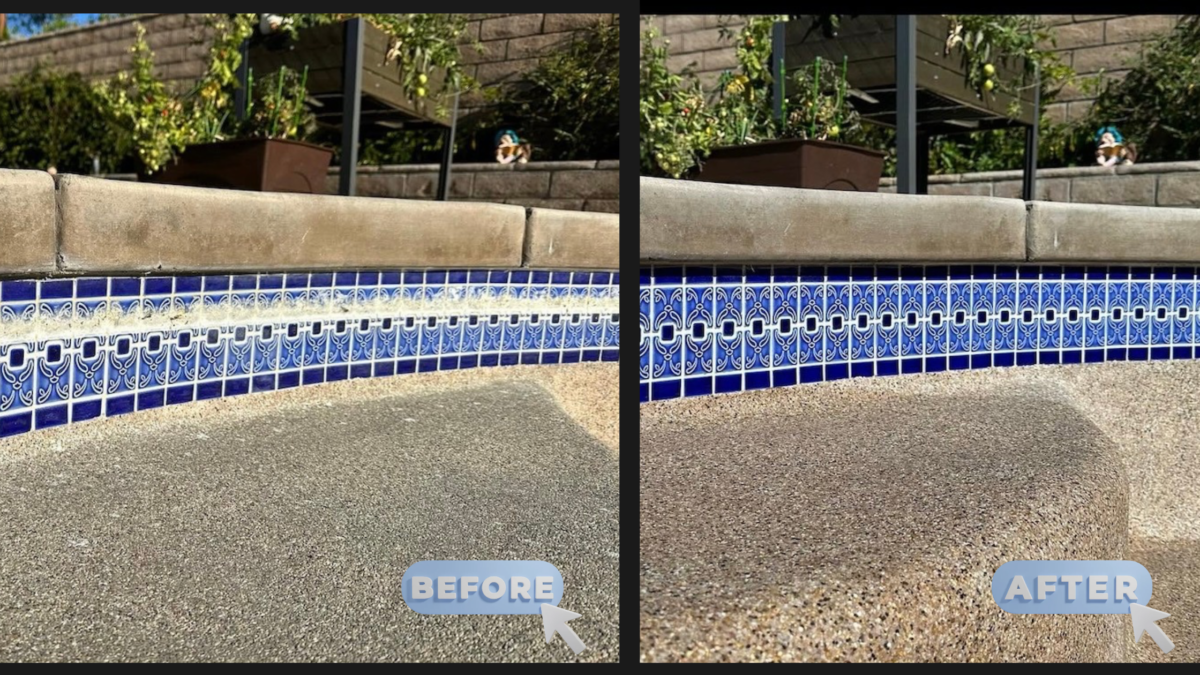
Simple Ways to Manage Calcium and Other Deposits
You can reduce mineral build-up in your pool by maintaining balanced water chemistry, monitoring water levels, regularly brushing pool surfaces, keeping the filtration system working properly, and addressing visible deposits before they become severe. While these steps can help slow mineral accumulation, they likely will not remove mineral scale that has already hardened onto tile. When that happens, professional pool tile cleaning may be necessary. For Coachella Valley homeowners, staying ahead of mineral build-up is particularly important. Heat, evaporation, and mineral-rich/hard water can all contribute to deposits around the waterline, making preventative maintenance an important part of keeping a pool looking its best.
Why Does Mineral Build-Up Form on Pool Tile?
Pool water naturally contains dissolved minerals. When water evaporates, those minerals do not evaporate with it. Instead, they remain in the pool and can become increasingly concentrated. Over time, calcium and other minerals may settle onto tile and other pool surfaces. Around the waterline, this often appears as a white or gray chalky layer. As deposits continue to accumulate, they can become harder, thicker, and more difficult to remove with ordinary brushing.
How Does Balanced Pool Water Help Reduce Build-Up?
Consistent water chemistry is one of the most important parts of controlling mineral deposits. Factors such as pH, alkalinity, and water hardness can influence whether calcium begins forming scale on pool surfaces. Regularly testing the water makes it easier to identify changes and adjust before visible buildup becomes significant. If you already use a professional pool maintenance company, ask about your water chemistry and whether calcium levels or other conditions may be contributing to recurring scale.
Should I Watch My Pool’s Water Level?
Yes. Evaporation can be significant during hot Coachella Valley weather, and frequently changing water levels can make the shifting waterline a particularly noticeable location for deposits. Keeping your pool filled to the appropriate operating level and monitoring changes can help maintain proper circulation and filtration. While adding water does not eliminate mineral accumulation, consistent pool care can help reduce the conditions that allow buildup to become a problem.
Does Regular Brushing Prevent Mineral Scale?
Brushing pool tile and surfaces can help remove light deposits before they become firmly attached. It is much easier to address early residue than a thick layer of hardened calcium scale. Pay particular attention to the waterline when performing routine maintenance. If you notice rough texture, chalky white deposits, or discoloration that does not disappear with normal brushing, the buildup may have progressed beyond what routine cleaning can address.
How Can I Keep Mineral Build-Up Under Control Long Term?
Reducing mineral buildup is usually an ongoing process rather than a one-time fix. Preventative maintenance can slow mineral accumulation, but it cannot always remove deposits that have already bonded to the tile. This is where professional pool tile cleaning can become an important part of long-term pool care.
Professional cleaners can evaluate the type of tile and severity of the buildup before selecting an appropriate cleaning method. Tile materials, colors, textures, and finishes vary, so the same technique should not automatically be used on every pool. Professional pool tile cleaning can remove stubborn calcium and mineral deposits, while also protecting the underlying surface. Balanced water, consistent filtration, regular brushing, and attention to the waterline can all help keep deposits under control, but only periodic professional cleaning can remove everything.
If white, chalky deposits are covering your beautiful pool tile, call Supreme Pool Tile Cleaning. Our team of experts can evaluate your pool tile and help remove stubborn mineral buildup, so you can get back to enjoying a cleaner, better-looking pool.